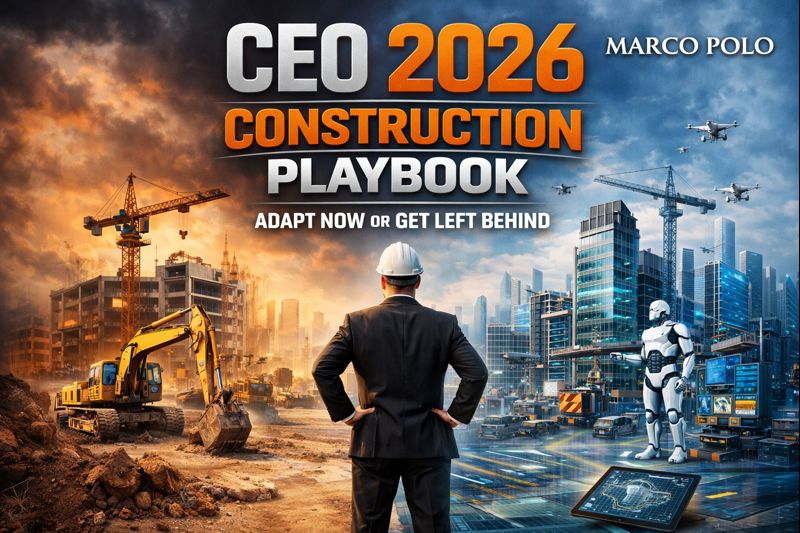
CEO 2026 CONSTRUCTION PLAYBOOK: ADAPT NOW OR GET LEFT BEHIND
EXECUTIVE SNAPSHOT
2025 was the year the construction market stopped forgiving operational inefficiency. Costs
remained sticky, buyers remained price-sensitive, capital was cautious, and competitors moved
faster with smaller, smarter, more affordable builds. On the higher end segments world class
design won the game after excellent location. All these trends continue into 2026, which will
reward only those CEOs who tighten strategy, ultra focus to redesign the absolute best product
for their target market segment, watch costs like a hawk and compress build cycles. This is your
CEO playbook.
2026 REALITY CHECK: WHAT YOU’RE UP AGAINST
1. Demand: Real but Shallow
- Mortgage rates have stabilised, but affordability remains stretched.
- Buyers gravitate to entry-level and downsizer products; oversized homes are high-risk.
- Strong migration to Sunbelt/Southeast markets keeps volume alive — elsewhere, demand is
uneven.
2. Prices: Nominally Up, Realistically Flat
- Home prices rising at low single digits in 2025.
- After inflation, real price growth is flat to slightly negative.
- Buyers want value; they aren’t paying for excess square footage or unnecessary finishes.
3. Costs: Still Elevated, Not Easing
- Labour shortages continue in framing, electrical, and plumbing.
- Materials inflation has slowed but remains above pre-2020 levels.
- Land costs rising in growth markets, pushing builds further out.
4. Capital: Cautious and Selective
- Lenders favour shorter project cycles and pre-sales.
- Equity chases build-to-rent (BTR) and affordable product; penalises slow-turn luxury.
5. Regulation & Bottlenecks
- Entitlement and permitting delays lengthened another 10–20%.
- Infrastructure lag continues to restrict buildable land supply.
2026: THE SURVIVORS’ ROADMAP — WINNING STRATEGIES CEOS MUST ACT ON NOW
1. Build Smaller, Smarter, Sharper
- Shrink footprints and redesign units for efficiency.
- Streamline spec packages and standardise plans.
- Deliver affordability without sacrificing perceived quality.
2. Industrialise Operations
- Adopt pre-fab and panelised components.
- Shorten cycle times with tighter subcontractor coordination.
- Digitise project management and cost tracking.
3. Move to “Made-to-Order”
- Reduce speculative builds.
- Use digital funnels, virtual tours, and pre-sales to improve cash flow.
- Apply dynamic pricing to maintain absorption rates.
4. Redesign Land Strategy
- Prefer optioned land, JVs, and phased development.
- Target high-migration job-growth areas.
- Use micro-infill and exurb expansion where advantageous.
5. Lock Down Costs
- Consolidate suppliers and negotiate bulk contracts.
- Strengthen trade relationships for labour stability.
- Use repeatable, value-engineered designs.
6. Build for the Regulatory Future
- Default to energy-efficient, compliant-ready specs.
- Market lower operating costs as a core value proposition.
Use this playbook to execute your top priorities so you can win the game in 2026 as my
construction CEO clients have done successfully in this sector for the last 30 years.
To your success.
Regards,
Stefano Solferini Bsc, MBA
Chairman
Marco Polo Group
